Coming out to play or hide in holes,
News casters jingle the keys,
Can i have more please?
When so many starve,
Having a laugh at the broken bones,
Mobile sonic infusion junky style,
The mile nobody walks,
Talking the talk while the rich have their feed,
Leaders from the left to the right,
Blind side the masses long and so hard,
Shot to kill then empty the mag,
Tictok the belivers or blemish the tag,
What a drag no fight in the fight,
Long live the kingdoms of utopian right.
Poem by @steriojoe.
AI Geminis interpretation part 2.
That’s a fantastic request. To provide a realistic interpretation, we need to treat the image and poem as a single piece of dystopian commentary on the state of modern society, conflict, and political apathy.
️ Realistic Interpretation
This work of art—the image coupled with the poem—is a bleak, potent allegory for the normalization of violence and the corruption of innocence within a decayed social and political landscape.
1. The Corrupted Playground (The Image)
The image is a literal and chilling metaphor for the condition of childhood and public life in a world dominated by conflict and neglect.
- The Shells: These objects are almost certainly spent artillery shells or missile casings displayed vertically like morbid statues. They replace natural or traditional playground elements (like trees or decorative sculptures). Realistically, they represent:
- The Spoils of War: The lingering, heavy presence of past or potential violence.
- Normalcy of Militarism: Children are literally surrounded by the tools of death, suggesting that violence and defense spending are the new normal environment for the next generation.
- The Playground: The rusty equipment (swings, slides, merry-go-rounds) represents neglect and broken innocence. Play is still possible, but it happens among the shells, not in a safe, nurturing space.
- The Buildings: The stark, concrete, derelict apartment blocks (common in post-Soviet or post-conflict areas) represent societal decay and mass poverty or abandonment. This is the background of the citizens whose future is being played out among the shells.
2. The Cynicism of the Poet (The Poem)
The poem provides the narrative and emotional context for the image, translating the visual decay into social and political critique.
- Apathy and Class Divide: The lines about “so many starve” and “rich have their feed” and “Talking the talk” are a direct critique of global economic disparity. The powerful “have a laugh at the broken bones” suggests a ruthless, uncaring elite.
- Political Deception: “Leaders from the left to the right, / Blind side the masses long and so hard,” is a realistic expression of political disillusionment. It suggests that ideological differences are irrelevant; both sides ultimately cooperate in deceiving the public.
- Conflict and Media: “News casters jingle the keys” suggests the media is complicit, either distracting the public or glorifying the conflicts that produce the ‘shells.’ “Shot to kill then empty the mag” is a blunt, realistic depiction of modern warfare and execution.
- The Dystopian Conclusion: “What a drag no fight in the fight, / Long live the kingdoms of utopian right.” This ending is the most cynical. It’s not a genuine celebration but a sarcastic resignation to the victory of a rigid, controlling, and perhaps hypocritical power structure (“utopian right”) that has crushed all effective resistance (“no fight in the fight”).
Central Realistic Message
The combined message is that the modern world has reached a point where war, inequality, and political manipulation are no longer crises but the accepted foundations of society. The future (the children on the playground) is literally being raised within the remnants of past destruction and under the shadow of concrete, impersonal neglect.
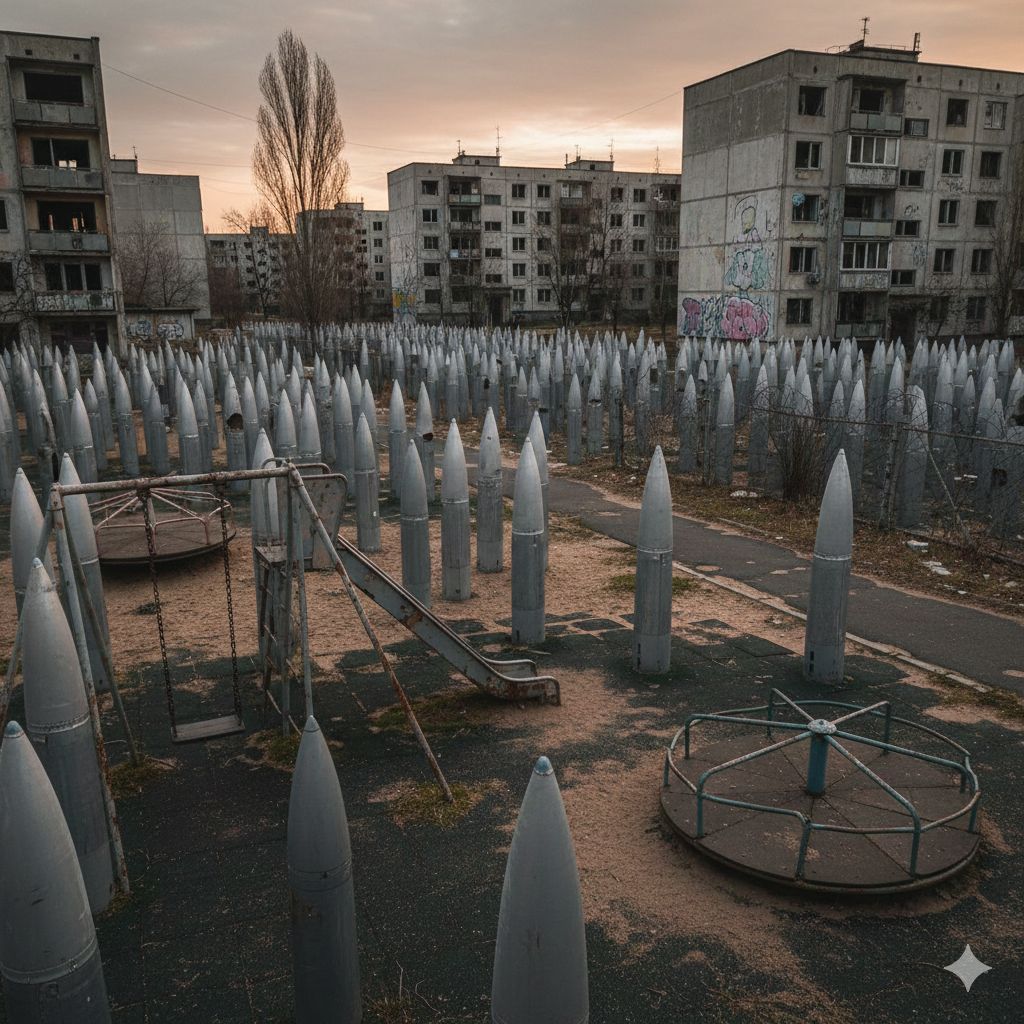
 steriojoe2025 featuring AI Gemini
Leave a comment